

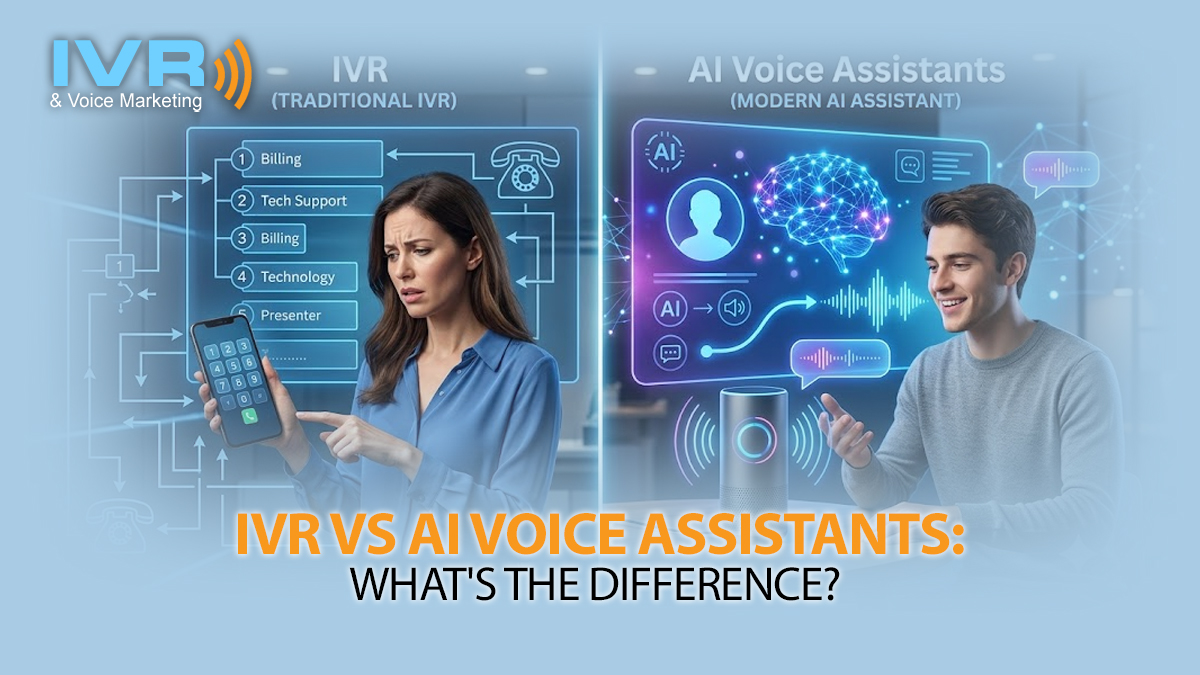
The way businesses communicate with customers has changed significantly over the years. Today, customers expect instant support, clear communication, and minimal waiting time. This has encouraged companies to adopt smarter technologies like Interactive Voice Response (IVR) systems and AI voice assistants. While both automate customer interactions, they are built for different purposes. Understanding how they work can help businesses invest in the right communication solution for better customer satisfaction and improved productivity.
Understanding Interactive Voice Response
An Interactive Voice Response system is designed to guide callers through a structured menu using keypad selections or simple voice commands. Whether a customer wants to speak with sales, customer support, or billing, IVR automatically directs the call to the appropriate department without the need for a live operator.
The effectiveness of any IVR system depends on how professionally it communicates. High-quality Welcome Messages Recording creates a positive first impression, while clear prompts make navigation effortless. Businesses also use professionally produced greetings to maintain a consistent brand voice throughout every customer interaction.
How AI Voice Assistants Work
Unlike traditional IVR, AI voice assistants understand natural language. Customers can simply explain what they need instead of listening to multiple menu options. Using artificial intelligence, the system interprets the request, responds conversationally, and can even learn from previous interactions to deliver increasingly personalized experiences.
AI voice assistants are ideal for businesses handling detailed enquiries, appointment bookings, or customer support requests that require more than simple call routing.
The Key Differences
The biggest distinction between the two technologies is flexibility. IVR Voice Over Recording follows predefined call paths, making it highly reliable for repetitive tasks such as directing calls, providing business hours, or sharing basic information. AI voice assistants, however, adapt to conversations in real time and respond according to customer intent.
Another important difference is implementation. Traditional IVR solutions are generally faster and more cost-effective to deploy, while AI-powered systems require greater investment and ongoing optimization. For many businesses, professionally recorded Auto Attendant Recording offers an affordable way to deliver a polished customer experience without the complexity of artificial intelligence.
Choosing the Right Solution
There is no one-size-fits-all answer. Businesses with straightforward customer enquiries often benefit greatly from a well-designed IVR system supported by professional On-Hold Messages Recording that keeps callers informed while they wait. Companies managing large volumes of complex enquiries may find AI voice assistants better suited to their needs.
Many organizations now combine both technologies. IVR efficiently handles initial call routing, while AI manages detailed conversations that require greater understanding and personalization. Adding professionally produced After Office Hours Messages also ensures customers receive useful information even when your business is closed.
Deliver a Better Calling Experience
Whether you need a customized Call Center Recording, engaging business greetings, or professionally recorded Customer Phone Surveys, investing in quality voice recordings creates a stronger first impression and improves every customer interaction. A professionally voiced telephone system reflects your brand’s credibility and keeps callers engaged from start to finish.
For premium business voice recording solutions, contact ivr.ae at +971-4-5193444 or email creative@eds.ae